

Build for yourself first: why dogfooding teaches you what the customer needs
A lab that uses what it builds every day finds the faults, gaps and real priorities sooner. This is how we see it at Codelabs Studio.

When a customer can leave at any time, the product has to earn the renewal every month. Why that is a good discipline and how it translates into plans.
A lock-in clause says something about whoever proposes it: that they are not sure the customer will stay of their own free will. It can be justified when there is a large upfront investment, but in recurring software it is usually a way of keeping someone who is no longer happy. The practical effect is an awkward relationship: the customer pays out of inertia and the provider stops finding out what is going wrong.
Our products bet on the opposite. AgenteUno, AlmaSuite, MentorSuite, InmoSuite, StaySuite, BeautySuite, OdontoSuite, AudioMap and most of the range state in their plans that there is no lock-in. Anyone who stops using the product can leave, and that forces the product to earn every renewal.
Clear pricing is the other half. A plan should be explainable in one sentence: what it includes, who it is for and what it costs.
Each model answers a type of customer. Someone starting out who wants no risk prefers a cost that grows only if they sell more. Someone who already has volume prefers a fixed fee with no surprises. What should not happen is that the customer has to decipher the invoice. When a product includes optional extras (for example, extended AI or voice modules in AlmaSuite), they should be described in the same place as the plan.
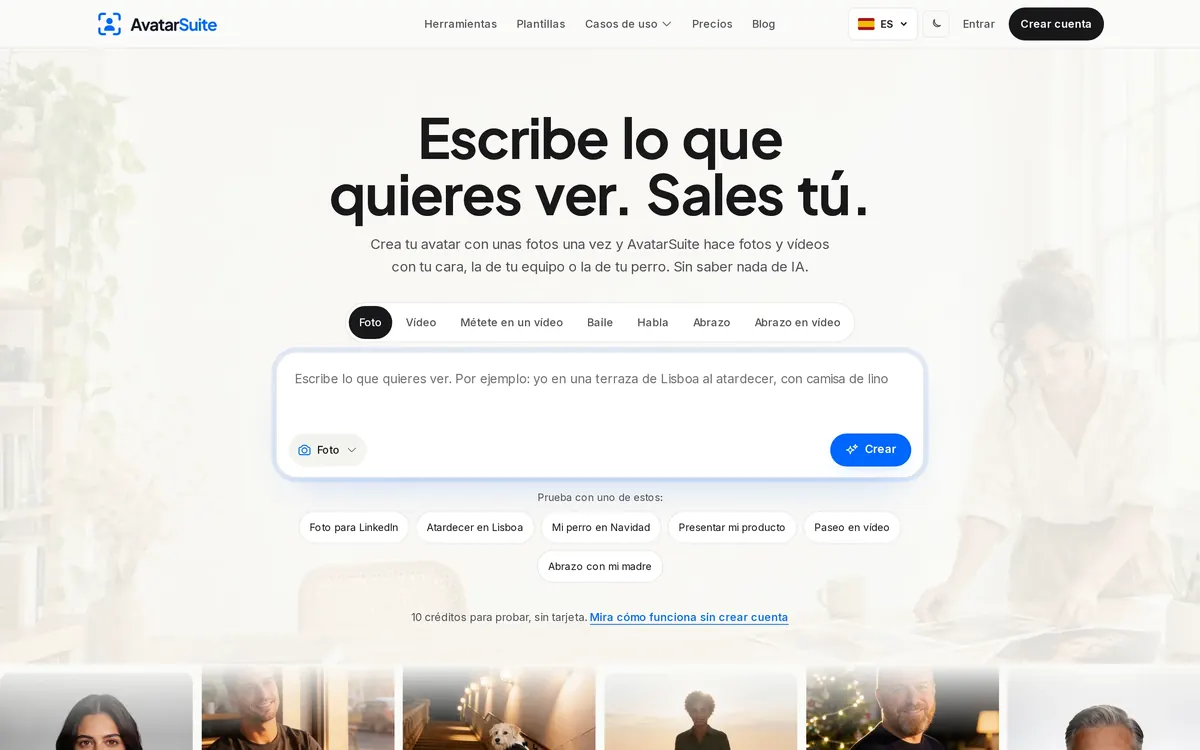
A special case is AvatarSuite: there is no subscription, you buy credit packs that do not expire. For a company that generates content irregularly, paying only for use avoids fees in months when nothing is produced. Similarly, Embarca offers a free app and a one-off paid Pro plan, with no subscription.

A trial period has a specific job: it reduces the risk of getting it wrong. Several products offer one: 14 days in AgenteUno (no card), LaunchSuite (no card) and AlmaSuite (with card), and free plans in AudioMap, VideoSuite, MemoryFirst, Memchats, TubExperto or Docu.expert. Each has different limits, designed so you can check the real value without free use replacing the paid plan.
The free plan is neither a trap nor charity: it is a way for the product to prove its value with the user's real work. Someone who stays on the free plan is still a user who learns and recommends; someone who outgrows it does so because they got value.
Several products have a pioneer price for those who arrive first: InmoSuite, StaySuite, BeautySuite and OdontoSuite have it until 31 December 2026, as do Lexiel, Docu.expert, MemoryFirst and TubExperto. The condition for it to be honest is that it is temporary and dated. A pioneer price with an end date is an invitation; without one, it is a permanent urgency trick.
The pioneer should also get something in return for their early bet: the reduced price, often kept for as long as the subscription continues, in exchange for their opinion reaching the product. It is a clear exchange, and that is why FeedbackSuite, the portfolio's feedback engine, makes sense as part of the model.
Growing without lock-in is slower at first and steadier afterwards. A customer who stays because it works for them buys more, recommends and forgives an occasional failure. One who stays because of a contract leaves as soon as they can and tells people why.
For a company that sells services or software, a useful exercise is to work out what would happen if all customers could leave tomorrow. If the answer is that many would go, the priority is to improve the product, not the contract. If the answer is that almost nobody would, you have a real advantage that you can offer as a guarantee.
Offering free cancellation without a solid product is a risk. It requires three things: support that answers, constant improvements and transparency about failures. It also means looking honestly at usage data: if a customer stops logging in, that is a signal to help them, not to wait for them to cancel. When the model works, the team works each week with one simple question: what would make this person want to keep going.
Another requirement is consistency between what is promised and what is charged. That is why published prices should match those applied, extras should be visible and any price change should be announced in advance. A customer who knows what they will pay and why is a customer who is not surprised, and customers without surprises tend to stay.

The company pays more when it handles more, and can leave if it stops fitting. It is the kind of relationship we look for: the price goes along with usage and does not punish it.
Four concrete practices: publish prices with their period and conditions; offer a trial or a free plan with honest limits; put a date on any special offer; and make cancelling as easy as signing up. They do not solve everything, but they put the relationship on the right footing: the customer stays because they want to, and you work every month to keep them wanting to.
You may also like


What we learn in each product goes into building yours too. Tell us what you need and we will reply with a proposal.
Tell us about your caseA lab that uses what it builds every day finds the faults, gaps and real priorities sooner. This is how we see it at Codelabs Studio.

A demo with catalogue examples is not very convincing. A demo with your real information shows whether it is worth it. A method to validate before you pay.

Maintaining a broad portfolio is only possible if every new tool serves all the others. How reuse works in practice.